
On César Chávez
Always considered a problematic figure, and in an age of exposing sexual violence, César Chávez should be denounced after the allegations against him

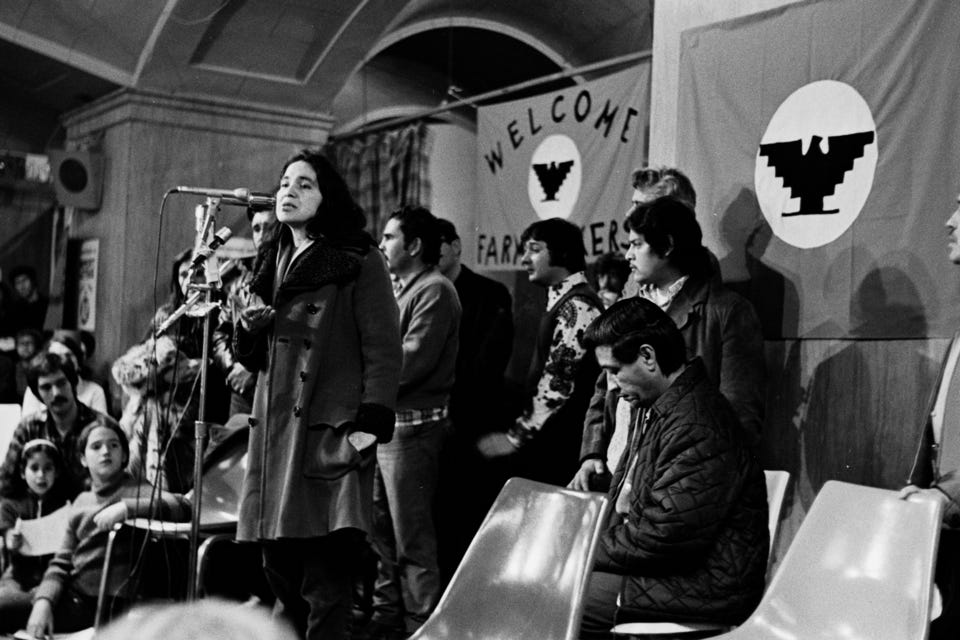
I once admired what César Chávez was able to accomplish with the United Farm Workers (UFW) before he corrupted it. But the more you read about him, the more you begin to realize that his counterpart, Dolores Huerta, was the real driving force behind the movement’s success. All he brought to the table was being a man in an age of unfettered machismo. If not for Huerta, you likely would have never heard of Chávez. In other words, without her, he was nothing. The latest allegations against him confirm that more than ever.
Chávez was controversial early on because of xenophobic beliefs and later, his corruption of the UFW. He, like racists today, used undocumented immigrants as scapegoats for everything wrong in the U.S. and encouraged his supporters to report migrants to the Immigration and Naturalization Service (INS). While he was met with some resistance within the labor movement, he pushed back. To Chávez, his nationality and citizenship set him apart from immigrants.
Tax Season Sale! Support my work for only $35/year forever!
However, by the early 1970s, the Chicano movement was fully embracing the Mexican immigrant community based on the concept of Aztlán, the idea that the U.S. Southwest is the historical homeland of the Aztecs and that people of Mexican descent were all related. But it wasn’t just Mexican immigrants Chávez pushed aside. Even the once-isolated and aging Filipino farmworkers who organized the pivotal grape strike in 1965, which led to the creation of the National Farm Workers Association, later the UFW, were more widely recognized.
It wasn’t until Chávez started losing allies in the Chicano movement that he would shift his views on immigration, highlighting just how out of step he had been. Many will point to this and argue that he evolved on the issue. While that’s largely true, it was about this time that the UFW began seeing a flood of members leaving the union due to a shift in focus. The controversies around Chávez didn’t just undermine much of his work in the union and what he had accomplished in organizing farm workers, it also affected how history looked back at his life.
The recent allegations of sexual assault further challenge what he stood for.
The latest reporting in the New York Times and the revelations by Dolores Huerta acknowledging that she, too, was one of his victims are shocking. Chávez has gone from simply being a once-controversial xenophobic figure who evolved to being exposed as an alleged violent predator.
In the end, Dolores Huerta is the hero of this story for pushing back on Chávez’s xenophobia and for the successes of the labor rights movement while enduring Chávez’s predation. That’s who we should celebrate, not César Chávez.
Excerpt from Dolores Huerta’s Essay
“As a young mother in the 1960s, I experienced two separate sexual encounters with Cesar. The first time I was manipulated and pressured into having sex with him, and I didn’t feel I could say no because he was someone that I admired, my boss, and the leader of the movement I had already devoted years of my life to. The second time, I was forced, against my will, and in an environment where I felt trapped.
“I had experienced abuse and sexual violence before, and I convinced myself these were incidents that I had to endure alone and in secret. Both sexual encounters with Cesar led to pregnancies. I chose to keep my pregnancies secret and, after the children were born, I arranged for them to be raised by other families that could give them stable lives.
“Over the years, I have been fortunate to develop a deep relationship with these children, who are now close to my other children, their siblings. But even then, no one knew the full truth about how they were conceived until just a few weeks ago.
“I carried this secret for as long as I did because building the movement and securing farmworker rights was my life’s work. The formation of a union was the only vehicle to achieve and secure those rights, and I wasn’t going to let Cesar or anyone else get in the way. I channeled everything I had into advocating on behalf of millions of farmworkers and others who were suffering and deserved equal rights.”
Arturo is an independent freelance journalist. He has written hundreds of articles on policing, immigration, race, and Latin America. His work has been featured in outlets such as Unicorn Riot, Latino Rebels, Capitol Press, Momentum, and abroad. He is the Editor-in-Chief at the Antagonist Magazine and is a co-leader of the Writers and Editors of Color.
Heartbreaking, yet not surprising. The PBS documentary tells us a lot without spelling it out directly. The breadcrumbs were there I think. Dolores Huerta has given literally everything she has to the movement at great personal cost, and we should celebrate her, first and foremost. La Reina.
Et tu.